Indian · lunch, dinner
Kosha Mangsho (Bengali Slow-Cooked Mutton Curry)
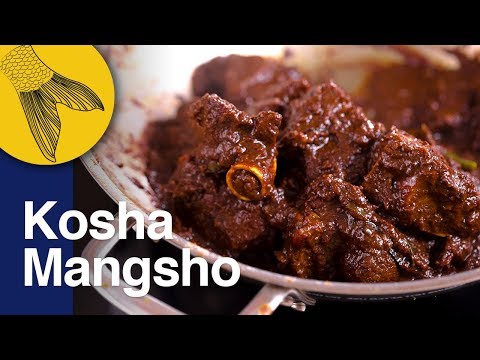
Video by Bong Eats on YouTube · Open on YouTube · Is this yours?
- Low saturated fat (2.8 g, 9.9% of the energy)
- Gluten-free ingredients
- No nuts listed
Allergens found in the listed ingredients: Milk, Mustard. Worked out from the ingredient list, not tested. Stock, sauces, spice mixes and other packaged foods can contain allergens, so always read the labels on what you buy. If you have a food allergy, don’t rely on this.
About 27 g protein and 13 g net carbs a serve: goat slowly browned with onions, spices and yoghurt in just 20 g of mustard oil for the whole pot, with under 2 g added sugar a serve.
The printable card is ink-friendly, fits on one page and has a QR code back to this recipe.
Ingredients 24
Method
Tap a time to watch that step in the video.
- Mix the mutton with the marinade ingredients — onion and garlic paste, yoghurt, salt, turmeric and shahi garam masala — massage well, cover and refrigerate for about 8 hours. 0:13
- Get the whole spices ready, slice the onions and crush the garlic and green chillies to a paste. 1:38
- Heat the mustard oil until it smokes lightly and turns pale, then add the dried chillies, bay leaves, cardamoms, cloves and cinnamon. 3:18
- Add the onions and fry until brown, about 15 minutes. Add the ginger, garlic and chilli pastes and fry 5 minutes, then the ground spices with 100 g water, and fry about 15 minutes more. 3:41
- Add the mutton and fry on high heat for about 15 minutes, stirring often. 4:46
- Stir in the beaten yoghurt, salt and sugar. For the next 75–90 minutes on medium heat, add about 30 ml hot water, stir, cover for a minute, uncover and scrape up the browned bits — again and again until the meat is deep brown. 5:06
- Add water for as much gravy as you like and the slit green chillies, cover and cook until the meat tears easily with two fingers. Stir in the ghee. 6:18
Tip. Serves 6. The slow, controlled browning makes the dark gravy, so stir often or it will catch and taste bitter. Kolkata eats it with paratha or polao; with cauliflower rice or a salad it stays low in carbs.
The method is a summary in our words — the video shows every step.
One serve gives you 1 of 6
Where the energy comes from one serve
- Net carbs 22%
- Protein 44%
- Fat 34%
Low carb: under 26% of the energy is from carbs.
One serve has about 69% of a day’s sodium. Use less salt, stock or sauce, or a reduced-salt version, to bring it down.
Vitamins & minerals % of a day, one serve · tap for more
Vitamin B12 High50%
1.2 µg a serve, mostly from mutton (86%). Keeps nerves and blood cells healthy. Found almost only in animal foods and fortified foods (some plant milks, nutritional yeast), so vegans need a reliable source.
Zinc High48%
5.3 mg a serve, mostly from mutton (87%). Needed for immunity, wound healing, taste and growth. Meat, seafood, legumes, seeds and whole grains supply it.
Iron High27%
4.9 mg a serve, mostly from mutton (66%). Carries oxygen in your blood. Iron from plants absorbs better with vitamin C in the same meal — lemon, tomato or capsicum.
Selenium High23%
13 µg a serve, mostly from mutton (82%). Part of the body's antioxidant enzymes and needed for thyroid hormones. Seafood, eggs, meat and Brazil nuts are rich sources.
Vitamin C Source16%
14 mg a serve, mostly from green chillies (45%). An antioxidant needed for collagen, immunity and iron absorption. Long cooking destroys some, so raw herbs, citrus and capsicum help.
Omega-3 Source16%
0.3 g a serve, mostly from mustard oil (78%). Omega-3 fats support the heart and brain. Oily fish give EPA and DHA; walnuts, flax, chia and canola give ALA, which the body converts only a little.
Potassium Source14%
670 mg a serve, mostly from mutton (53%). Balances sodium to help control blood pressure and keeps muscles and nerves working. Beans, potatoes, leafy greens and fruit are rich sources.
Vitamin B6 Source13%
0.2 mg a serve, mostly from onions (38%). Helps turn food into energy and make brain messengers. Chickpeas, fish, poultry, potatoes and bananas are good sources.
Show the other 7
Calcium9%
120 mg a serve, mostly from yoghurt (30%). Builds bones and teeth and helps muscles and nerves work. Dairy, calcium-set tofu, sardines with their bones and some greens supply it.
Magnesium7%
28 mg a serve. Takes part in hundreds of reactions — energy, muscles, nerves, blood sugar and bones. Nuts, seeds, legumes and whole grains are good sources.
Vitamin E7%
1 mg a serve, mostly from mutton (30%). An antioxidant that protects cell membranes. Nuts, seeds and plant oils such as olive oil are the main sources.
Folate7%
28 µg a serve, mostly from onions (45%). Needed to make DNA and new cells — especially important before and in early pregnancy. Legumes and leafy greens are rich sources.
Vitamin A5%
41 µg a serve, mostly from kashmiri red chilli powder (30%). Keeps eyes, skin and the immune system healthy. Orange vegetables and dark greens give beta-carotene, which the body turns into vitamin A.
Vitamin K4%
5.2 µg a serve. Needed for blood clotting and bones. Leafy greens and herbs are very rich in it. If you take warfarin, keep your intake steady and talk to your doctor.
Vitamin D0%
0 µg a serve. Helps you absorb calcium for bones and supports muscles. Few foods have much — oily fish, eggs, UV-exposed mushrooms, fortified milks. Sunlight is the main source.
Estimated from the ingredient list with USDA FoodData Central values; % of a day uses the food-label daily values. How this works
You might also like
 Bangladeshi Shrimp Malai Curry (Chingri Malaikari)Indian · 462 kcal · 19 g protein
 Bengali Fish Curry with Mustard and Poppy (Machher Jhal)Indian · 220 kcal · 16 g protein
 Bhetki Machher Jhol (Bengali Fish Curry with Vegetables)Indian · 260 kcal · 24 g protein
 Chatpata Bhindi AlooIndian · 165 kcal · 3.7 g protein
 Creamy Chana Masala (No Cream)Indian · 397 kcal · 14 g protein
 Dhaba-Style Rajma MasalaIndian · 343 kcal · 14 g protein
Recipe and video by Bong Eats; the method summary, nutrition estimate and diet notes are Notbroken’s. General information about food, not dietary advice.