Middle Eastern · snack, side
Muhammara (Syrian Red Pepper and Walnut Dip)

Video by Middle Eats on YouTube · Open on YouTube · Is this yours?
- Vegan
- Low saturated fat (1.8 g, 8% of the energy)
Allergens found in the listed ingredients: Gluten, Tree nuts, Sesame. Worked out from the ingredient list, not tested. Stock, sauces, spice mixes and other packaged foods can contain allergens, so always read the labels on what you buy. If you have a food allergy, don’t rely on this.
Roasted red peppers and walnuts make a vegan dip rich in vitamin C and plant omega-3, and most of its fat is the unsaturated kind from walnuts and olive oil.
The printable card is ink-friendly, fits on one page and has a QR code back to this recipe.
Ingredients 13
Method
Tap a time to watch that step in the video.
- Toast the walnuts in a dry pan over medium heat, stirring, for about 5 minutes until they smell toasty; tip out. Toast the breadcrumbs in the same pan for about 5 minutes until a few shades darker. 3:23
- Put the peppers (stalks trimmed) and a halved onion on a rack over a foil-lined tray and grill (broil) on medium about 8 minutes a side, turning until charred all over and soft. 1:16
- Pile the hot peppers and onion into a bowl, cover tightly with plastic wrap and leave 15 minutes. Peel off the skins and remove cores and seeds (don't rinse them). Weigh 250 g pepper flesh and keep half the onion. 2:19
- Put the walnuts, breadcrumbs, pepper, onion, olive oil, pomegranate molasses, tahini, Aleppo pepper, cumin and salt in a food processor. Blend 1–2 minutes, scraping down the sides, until it looks like a red pesto. 4:06
- Pile into a bowl, swirl a well in the centre with the back of a spoon, drizzle with olive oil and top with chopped walnuts, a pinch of Aleppo pepper and a sprig of mint. 5:33
Tip. Serves about 8 as a dip (our estimate). Eat with flatbread or raw vegetables. For the Lebanese version, stir in 2 tbsp tomato paste and ½ tsp sumac. Keeps 4–5 days in the fridge.
The method is a summary in our words — the video shows every step.
One serve gives you 1 of 8
Where the energy comes from one serve
- Net carbs 29%
- Protein 7%
- Fat 64%
For comparison, low-carb eating usually gets under 26% of its energy from carbs, and ketogenic eating under 10%. Why this is here
Vitamins & minerals % of a day, one serve · tap for more
Omega-3 High53%
0.9 g a serve, mostly from walnuts (80%). Omega-3 fats support the heart and brain. Oily fish give EPA and DHA; walnuts, flax, chia and canola give ALA, which the body converts only a little.
Vitamin C High46%
41 mg a serve, mostly from roasted red pepper flesh (97%). An antioxidant needed for collagen, immunity and iron absorption. Long cooking destroys some, so raw herbs, citrus and capsicum help.
Vitamin E Source11%
1.7 mg a serve, mostly from olive oil (56%). An antioxidant that protects cell membranes. Nuts, seeds and plant oils such as olive oil are the main sources.
Vitamin B6 Source10%
0.2 mg a serve, mostly from roasted red pepper flesh (53%). Helps turn food into energy and make brain messengers. Chickpeas, fish, poultry, potatoes and bananas are good sources.
Show the other 11
Iron8%
1.4 mg a serve, mostly from fine breadcrumbs (25%). Carries oxygen in your blood. Iron from plants absorbs better with vitamin C in the same meal — lemon, tomato or capsicum.
Magnesium8%
34 mg a serve, mostly from walnuts (35%). Takes part in hundreds of reactions — energy, muscles, nerves, blood sugar and bones. Nuts, seeds, legumes and whole grains are good sources.
Folate8%
31 µg a serve, mostly from roasted red pepper flesh (46%). Needed to make DNA and new cells — especially important before and in early pregnancy. Legumes and leafy greens are rich sources.
Selenium7%
4 µg a serve, mostly from fine breadcrumbs (68%). Part of the body's antioxidant enzymes and needed for thyroid hormones. Seafood, eggs, meat and Brazil nuts are rich sources.
Vitamin A6%
56 µg a serve, mostly from roasted red pepper flesh (88%). Keeps eyes, skin and the immune system healthy. Orange vegetables and dark greens give beta-carotene, which the body turns into vitamin A.
Vitamin K6%
6.8 µg a serve, mostly from olive oil (60%). Needed for blood clotting and bones. Leafy greens and herbs are very rich in it. If you take warfarin, keep your intake steady and talk to your doctor.
Potassium5%
210 mg a serve, mostly from roasted red pepper flesh (31%). Balances sodium to help control blood pressure and keeps muscles and nerves working. Beans, potatoes, leafy greens and fruit are rich sources.
Zinc5%
0.6 mg a serve, mostly from walnuts (39%). Needed for immunity, wound healing, taste and growth. Meat, seafood, legumes, seeds and whole grains supply it.
Calcium3%
45 mg a serve, mostly from fine breadcrumbs (31%). Builds bones and teeth and helps muscles and nerves work. Dairy, calcium-set tofu, sardines with their bones and some greens supply it.
Vitamin D0%
0 µg a serve. Helps you absorb calcium for bones and supports muscles. Few foods have much — oily fish, eggs, UV-exposed mushrooms, fortified milks. Sunlight is the main source.
Vitamin B120%
0 µg a serve. Keeps nerves and blood cells healthy. Found almost only in animal foods and fortified foods (some plant milks, nutritional yeast), so vegans need a reliable source.
Estimated from the ingredient list with USDA FoodData Central values; % of a day uses the food-label daily values. How this works
You might also like
 Easy Creamy HummusMiddle Eastern · 130 kcal · 4 g protein
 Lebanese Baba GanoushMiddle Eastern · 102 kcal · 2.5 g protein
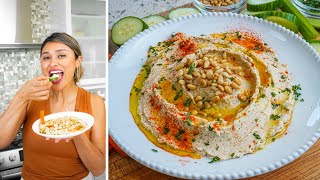 Roasted Cauliflower Hummus with Pine NutsMiddle Eastern · 218 kcal · 5.3 g protein
 Mutabbal Shawandar (Roasted Beetroot and Tahini Dip)Middle Eastern · 149 kcal · 4.3 g protein
 Lebanese TabboulehMiddle Eastern · 200 kcal · 1.9 g protein
 Lebanese Vegetarian Stuffed Grape LeavesMiddle Eastern · 276 kcal · 4.1 g protein
Recipe and video by Middle Eats; the method summary, nutrition estimate and diet notes are Notbroken’s. General information about food, not dietary advice.