Move · Videos · Strength · 23 min
Pulmonary Rehab Home Exercise Circuit (NHS Trust)
Check before you start. This video is made for people with a lung condition. It is general exercise, not treatment and not a programme set for you. Check with your doctor or respiratory team before you start, go at your own pace, and stop if you feel pain, dizziness, chest pain or unusual breathlessness. Keep your reliever inhaler nearby if you use one.

Video by Hertfordshire Community NHS Trust on YouTube · Open on YouTube · Is this yours?
An NHS community team's home circuit: a seated warm-up, then 11 timed exercises such as shoulder press, squats, wall press-ups and sit-to-stand, each with easier and harder options. Made for people assessed by a rehab team.
- 23 min
- All levels
- Low impact (no jumping)
- chair, wall
Good forHealthy ageing
Step by step 10
Tap a time to watch that step in the video.
- Seated warm-up: shoulder shrugs and rolls, head turns, twists, side bends, ankle moves, knee hugs, then marching. 0:52
- Chest stretch with palms facing forward, then shoulder press; pick the easiest press if you have heart problems. 4:30
- Heel raises: hold a worktop if needed and rise onto your toes; add dumbbell curls to make it harder. 7:39
- Knee raises: lift one knee at a time, slow and controlled, holding on lightly only if you need to. 9:20
- Upright row: lift as if pulling a big zip up to your chest, elbows out; stay lower if your shoulder is sore. 11:01
- Squats: hold a chair if needed and sit back as if onto a chair, keeping your bottom above your knees. 12:37
- Hamstring curls: hold a chair if needed and bend the knee to bring your heel up behind you, not too fast. 14:10
- Wall press-ups with hands at shoulder height, then a shoulder stretch raising a stick or clasped hands overhead. 15:43
- Sit-to-stand: arms crossed if you can, or use your hands; go at your own pace and stop when you need to. 18:58
- Step-ups on the bottom stair, changing legs halfway, or toe taps; then rest and let your breathing settle. 20:47
The steps are a summary in our words, checked against the video — the coach shows every move.
Form cues from the coach
- Breathe in and out through the nose; if breathless, in through the nose and blow out through the lips
- Hold a chair or worktop lightly for balance if needed
- Keep a steady pace, not too fast and not too slow
What it works Whole body
Tap an area for more videos that work it.
Joints it uses 4 takes load
- Shoulders takes loadshoulder press, upright rows, wall press-ups
- Hips takes loadsquats, sit-to-stands, step-ups
- Knees takes loadsquats, sit-to-stands, step-ups
- Ankles & feet takes loadheel raises, step-ups
- Elbows moveswall press-ups, curls, upright rows
- Wrists & hands movesdumbbells, wall press-ups
- Upper back moveschest stretch, rows, overhead stretch at the wall
- Standing on one leg. Keep a chair or a wall within reach.
Easier option from the coach: Easiest option shown for each move: seated, no weights, chair support, toe taps
A rough guide from Notbroken to the joints this video’s moves load — not a medical assessment, and your joints may differ. Some ache is normal; stop if a joint hurts sharply. How joints are rated
More like this
 Strength Routine With a Lung Condition (Asthma + Lung UK)Asthma + Lung UK · 14 min · all levels
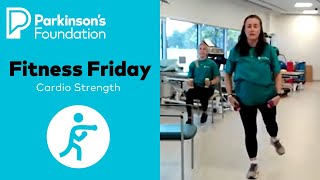 Cardio-Strength Class for Parkinson's (Parkinson's Foundation)Parkinson's Foundation · 31 min · all levels
 20-Minute Standing Dumbbell Strength for BeginnersSeniorShape Fitness · 20 min · beginner
 Strength Routine From a Cardiac Rehab Exercise PhysiologistCleveland Clinic · 10 min · all levels
 17-Minute Beginner Full-Body Dumbbell Workout with Form CuesWorkout With Roxanne · 17 min · beginner
 20-Minute Total Beginner Full-Body Workout, All Standinggrowwithjo · 20 min · beginner
Video by Hertfordshire Community NHS Trust; the summary, steps, cues, body areas and joint notes are Notbroken’s, written from what the coach actually does in the video and checked a second time. Warm up first, take the easier options until a move feels easy, and stop if you feel sharp pain, chest pain or dizziness. General instruction, not advice for your body. About & safety