Move · Videos · Mobility · 25 min
Gentle Daily Back Routine for Sciatica
Check before you start. This video is made for people with back pain or sciatica. It is general exercise, not treatment and not a programme set for you. Check with your doctor or physiotherapist before you start, go at your own pace, and stop if you feel pain, dizziness, chest pain or unusual breathlessness. Get medical help if pain spreads down a leg with numbness or weakness, or you have new problems with your bladder or bowel.

Video by Doctor O'Donovan on YouTube · Open on YouTube · Is this yours?
A doctor and a physiotherapist demonstrate a gentle back-care routine aimed at people with sciatica: knee rolls, knee hugs, cat-cow, child's pose, prone arm raises, bridges, standing forward folds and side bends, marching and a hamstring stretch, each with easier and harder options.
- 25 min
- All levels
- Low impact (no jumping)
- mat, chair, towel
Step by step 12
Tap a time to watch that step in the video.
- Knee rolls: knees bent and pelvis tucked, roll both knees to one side, hold about 5 seconds, then the other. 0:16
- Knee hugs: pull one knee to your chest for 10 to 15 seconds, then the other; both knees together is harder. 2:32
- Cat-cow on hands and knees: look up and lift your tailbone, then tuck your chin and round; smaller range if tense. 5:07
- Child's pose: knees wide, sit back towards your heels and walk your hands forward; hold 10 to 15 seconds. 7:02
- Prone arm raises: lying face down, lift one arm in line with your ear and hold 5 to 10 seconds; then the other. 9:09
- Bridges: squeeze your glutes to lift into a straight line, hold 15 to 20 seconds, then peel down slowly. 10:33
- Standing forward fold: slide your hands down your thighs, bending through your back; hold 5 to 10 seconds. 13:33
- Standing side bends: slide one hand down towards your knee, letting your head follow, then the other side. 16:31
- Marching on the spot: hands on hips, lift each knee slowly towards hip height; hold a chair or wall if needed. 18:10
- Hamstring stretch: lying down, towel around the ball of your foot, lift the leg and pull gently; 10 to 15 seconds. 20:06
- Optional seated nerve glide: heel on a second chair, point your toes as you tuck your chin, then flex and look up. 21:50
- Optional cobra: face down, hands beside your shoulders, push your chest up gently; keep your eyes forward for less. 23:13
The steps are a summary in our words, checked against the video — the coach shows every move.
Form cues from the coach
- Stay in mild discomfort only; stop if it becomes painful
- Keep the pelvis tucked as your knees roll side to side
- Peel the spine down one segment at a time as you lower from a bridge
What it works
Tap an area for more videos that work it.
Joints it uses light on the joints
- Neck moveschin tuck and look up in cat-cow, cobra, arm raises
- Shoulders movesprone arm raises, child's pose reach
- Wrists & hands movescat-cow on all fours, cobra
- Upper back movescat-cow, prone arm raises, cobra
- Lower back movesknee rolls, cat-cow, forward fold, side bends
- Hips movesknee hugs, bridges, child's pose, hamstring stretch
- Knees movesall fours, child's pose, marching
- Ankles & feet movesmarching on the spot, seated nerve glide
- Kneeling. Pressure on the kneecaps — a folded towel or cushion under the knees helps.
- Weight on your hands. The wrists bend back under load. Fists, push-up handles or your forearms ease it.
- Down on the floor. You get down to the floor and back up again.
- Rounding or twisting the back. With osteoporosis or a back problem, move smoothly and within comfort, and ask a physio which suit you.
Easier option from the coach: Easier option for every move: smaller range, cushion, chair or wall support
A rough guide from Notbroken to the joints this video’s moves load — not a medical assessment, and your joints may differ. Some ache is normal; stop if a joint hurts sharply. How joints are rated
More like this
 Fascial Fitness Programme by Robert Schleip and ColleaguesRobert Schleip · 54 min · intermediate
 Six-Exercise Low Back Care RoutineTone and Tighten · 11 min · beginner
 Gentle Low Back Exercises and Stretches With a Physical TherapistPrisma Health · 7 min · beginner
 17-Minute Gentle Spine Mobility Class: Bend, Arch, Twist, Side-BendKit Laughlin (Stretch Therapy) · 17 min · beginner
 NHS Back Care Class 1: Seated Spine MobilityNHS · 12 min · beginner
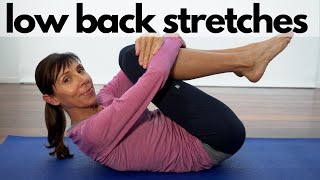 15-Minute Gentle Lower Back RoutineMichelle Kenway · 15 min · beginner
Video by Doctor O'Donovan; the summary, steps, cues, body areas and joint notes are Notbroken’s, written from what the coach actually does in the video and checked a second time. Warm up first, take the easier options until a move feels easy, and stop if you feel sharp pain, chest pain or dizziness. General instruction, not advice for your body. About & safety